Intended Parents Dominik and Dennis Share Their Surrogacy Story
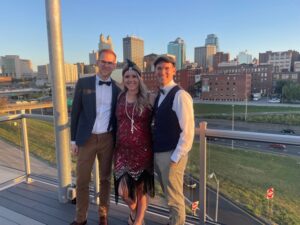
While each person’s path to parenthood may look a little different, there are many common threads – especially for those who go through fertility treatment to bring their babies into the world. Whether you’re a member of the LGBTQ+ community or not, choosing to pursue IVF, egg donors, and surrogacy share many similarities. In this blog, we’re excited to speak with Dominik and Dennis, from Germany. They are gay intended parents (IP), who are currently having a baby via gestational surrogacy.
How did the two of you meet and how long have you been together?
We met during college in fall 2011. It was Dominik’s first night joining the queer student’s group of Stuttgart university. When he went home that night, he told his roommates that he had met his future husband. They started dating soon after and became a couple in January 2012.
Why did you consider surrogacy to grow your family?
Soon after we met, t we discussed both of our wishes to have a family. Dominik was more optimistic about it then Dennis, who was skeptical if would be possible to achieve in Germany. Before 2017, Germany had not opened up marriage for same sex couples yet, so adoption was not possible for gay couples. Dominik had done some research on surrogacy back then also and eventually Dennis warmed up to the possibility. We both started saving up for the process.
In 2017 the idea became more of a reality when we attended a Men Having Babies conference in Brussels where we met IVF clinics, surrogacy agencies and most importantly surrogates and families that have gone through the process. Their experience and stories gave us hope that it would actually be possible to become parents, and have parenthood legally recognized in Germany.
How did you go about choosing a surrogacy agency? What was important to you?
We had a wealth of contacts to surrogacy agencies across the US from the conference in Brussels and started talking to many of the agencies in 2018. The screening process of a potential surrogate at each agency was important to us, as well as the prospective waiting time between choosing an agency and being matched. Also, the cost had to fit into our budget.
Why did you choose Pathways to Parenthood?
Most people we knew chose agencies in California. But since Dominik had lived in Missouri during high school, we had a good network of friends and people we consider family there. Plus, we felt a personal connection when we met Kerry and learned about Pathways To Parenthood. It was also very reassuring to know that if we chose Pathways To Parenthood in Kansas City, we’d have friends and ‘family’ in the area throughout the whole process.
What was the surrogate matching process like? How was the first meeting with your surrogate?
The day before Christmas Eve, when we were preparing for a COVID-restricted celebration without family, we got an email from Kerry sending us Lily’s profile. It was perfect timing since we were all off work and were able to use the time between the holidays to write emails, chat and get to know Lily via Skype. The three of us ‘clicked’ right away! When we finally did meet after travel restrictions were lifted, Lily’s first comment was “you are real!”. She was right, it was hard to believe! All meetings and communication until then had been digital but it worked so well for us that meeting her in person eight months after being introduced felt like meeting an old friend.
Describe the beginning of your surrogacy journey – was there a moment that stands out?
For us it started to get real when the clinic told us that not only did the egg donation process go better than expected, we also had seven viable embryos. The moment that really stood out was when, almost a year later, we met Lily for the first time to spend a few vacation days together in Croatia. By then she was already pregnant with one of our embryos.
What has your relationship with your surrogate been like? How did you communicate and keep in touch?
We believe it could not have gone better under COVID circumstances. Of course, we would have liked to meet in person more often but chatting via WhatsApp almost daily has allowed us to form a strong bond of trust.
Are you planning on being at the birth of your baby?
Yes, absolutely. We’re planning to be there three weeks before the due date to be in time and not miss this emotional moment.
What would your advice be to others who are considering surrogacy?
Trust your heart, take your time to choose an agency that you trust and also to form a strong connection with your surrogate. It could be a good idea to discuss and agree with your partner on how, what and when you want to share information about your journey. In our experience and at least in Germany, some people will ask the most intimate questions and expect you to answer.
Is there anything else you would like to share about your journey?
We feel so lucky that we were matched with Lily, we could not have asked for a more loving or more open surrogate. We have had a very smooth ride so far, but don’t be disheartened by the complexity of the process or if things don’t go as planned. With a good team and a good support system you’ll be able to get there.
If you’re a gay parent (or anyone in the LGBTQ+ community) and you’re considering parenthood, the team at Pathways to Parenthood can guide you through the process.
They have been helping bring together future parents and surrogates for 9 years!
Explore our egg donor FAQs to decide if egg donation is right for you

If you’ve ever wondered about donating your eggs, but have questions about the process, you’re not alone. Below are common egg donor FAQs that can give you more information about becoming an egg donor.
Are you taking all of my eggs – can I still have a baby later on?
There is a common myth that egg donation can result in the inability to have your own children because you are losing all of your eggs—this is false! Most women are born with 1million eggs, give or take a thousand or so! An egg donation cycle will typically result in 10-20 eggs retrieved. The biggest facto impacting your ability to have a baby of your own is the age that you attempt to conceive!
What should you include in your egg donor application essays and personal statement?
Much like a college application, these essays require some humble bragging. Your profile is designed to help someone decide if you’re the egg donor for them. It’s your story of “you”, in your own words. The essays allow the recipients to see you as a real person, so let them get to know you. Things to consider including in your profile are things that give insight into who you are:
- About your family – do you have children, a partner, brothers or sisters
- Why you decided to become an egg donor
- What you hope for someone who uses your eggs
- What you do for a living and why you chose this career
- Your outlook on life
- What is your personality like
- How would your closest friends and family describe you
- A goodwill message to a donor-conceived child, this is important as it may be given to child one day to explain genetic origins
How are donors and recipients matched?
As and egg donor, your profile will be available to egg recipients in our database. Most egg donor programs are anonymous so only non-identifying information is shared. Pictures are usually pat of the database profile so those are the only identifying information shared with future parents. Future parents (egg recipients) choose their donors based on a range of factors, including physical features, ethnic background, personality and talents.
How often can you donate your eggs?
It takes about 6 to 8 weeks for a physician to review your donation (whether it was safe, the quality and quantity of your eggs, etc.) before you may donate again. Pathways to Parenthood allows women to donate their eggs up to six times in their lifetime, a guideline established by the governing body of infertility, the American Society for Reproductive Medicine (ASRM).
Are there any expenses associated with egg donation?
No, the intended parents will be responsible for all costs of the cycle.
Is my egg donation anonymous?
The majority of egg donors choose to be anonymous. In these setups, no identifying information is shared between the donor and the intended family. Donors are also not informed of the outcome of their eggs. Semi-anonymous, or semi-open, setups also exist, in which donors and intended parents agree to share a small amount of information with one another. This may include locations or first names. Known donors, or open donors, are far less common. These setups involve a friend or family member of the intended parent(s) serving as a donor.
How will I be compensated?
Pathways to Parenthood Egg Donors compensation is $5,000 for a first-time donor, distributed upon completion of the cycle. Donors may be eligible for increased compensation upon subsequent cycles, if eligible.
Basic Criteria for Egg Donor Candidates:
- Between the ages of 21-29
- Healthy BMI: Under 29
- Physically and emotionally healthy
- Good family health history (including mental health)
- Non-smoker, non-drug user (all donors are tested)
- Have regular periods
- Not currently breastfeeding
- Willing to undergo medical and psychological evaluation
- Willing to take injectable medication
Becoming an egg donor is a big deal. It’s a decision that will affect many lives, including your own. There’s no denying that donating your eggs is a sacrifice, and you’re giving the gift of life to a couple waiting for a family. If you’ve decided to become an egg donor, Pathways to Parenthood can guide you through the process. They have been helping bring together future parents and egg donors for 9 years!
Pathways to Parenthood Surrogate Feature: Veronica
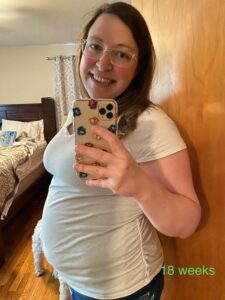
You can read all about what it’s like to be a surrogate. Online you can find what one might be able to expect and what the process is like but the best way to learn about a journey as a surrogate mother is through firsthand experience from someone who knows.
For our first Surrogate feature of 2021, we sat down (virtually) with Surrogate Veronica. Veronica is in her second trimester of her first surrogacy journey.
1) What first brought you to surrogacy? What made you interested in becoming a surrogate?
It’s something I always thought about doing after my first pregnancy. All of my pregnancies have been super easy and I love being pregnant but we don’t want any more kids for ourselves. I figure this way I can do something I love for someone else. I know not everyone has as easy a time getting and being pregnant as I did so it’s nice to help someone else when you are able.
2) During the matching process, were you interested in helping a specific type of family or were you open to any match?
I was open to any match. I originally thought I would match with a gay couple but then that’s not how it worked out. Regardless, I absolutely adore my IPs and I’m so glad to be working with them.
3) How did you build the relationship with your IPs during your first journey?
We text every now and then. If I have important questions or information then we will set up a time for a call or FaceTime— we both have young kids so usually after the bed time circus is a good time to chat. My IPs are semi local to me so they are able to come to some appointments and that has been really nice!
4) Do you have any advice to share with prospective surrogates?
It took me a long time from thinking about being a surrogate to being pregnant so plan for a lot of twists and turns. It has all definitely been worth it in the end.
If you are inspired by Veronica’s surrogate mother story, apply now to see if you qualify to be a surrogate. We have intended families waiting to be matched with a surrogate to grow their families. Pathways to Parenthood is offering a $500 bonus payment to anyone that completes the screening process and joins our program.
Surrogate Bonus – Pathways to Parenthood

Many women enjoy being pregnant. From the glowing skin to the baby bump, there’s a lot to love about the pregnancy journey. Many people who enjoy being pregnant, but aren’t looking to expand their family, choose to give the gift of parenthood to those who can’t conceive on their own through surrogacy. Pathways to Parenthood is offering a $500 bonus payment to anyone that completes the screening process and joins our program. Since we’re always in the market for incredible women who have the heart to help create families, this program is our way of saying “thank you.”
Why Are We Offering a Bonus?
Surrogacy is extremely important. The more surrogates that we find, the more families that we can help have children – and we think that deserves a bonus! We have many intended parents waiting to be matched with a surrogate to grow their families.
To learn more about our surrogacy process, please click here!
*Your $500 bonus will be paid out once the screening process has been completed.