Stephanie’s Journey: What It’s Really Like to Become a Surrogate for the First Time
Posted by Pathways to Parenthood | May 21, 2026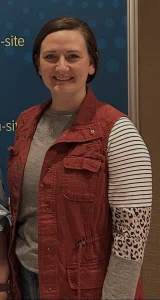 Before she filled out a single form, Stephanie was doing what you might be doing now: quietly asking whether she was the kind of person who could do this. She lives in mid-Missouri, has worked as a dental assistant for almost seven years, and is raising a five-year-old daughter on her own. Surrogacy was not something she grew up around. For most of her life she pictured it as something a woman did only for a sister or close friend, never a path she could choose with an agency, and that kept the idea at arm’s length longer than it needed to.
Most women curious about first time surrogacy don’t really know where to turn first. Pathways to Parenthood is a Kansas City area surrogacy agency working with surrogates across Missouri and Kansas. Stephanie’s early steps map the part nobody explains well which is that you do not need it all figured out to start.
How Do You Know You’re Ready to Begin Your Surrogacy Journey?
For Stephane there was no lightning bolt she can recall. “No specific moment,” she said about what first drew her in, “just thorough research.” Underneath it was the reason she did not have to search for,she is a mother, and asked whether that shaped her decision, the answer came before the question finished. “Absolutely, the main reason, actually,” she said. “I would really like to help others experience being a parent. It truly is amazing.”
Determining if you’re ready to become a surrogate for the first time usually comes down to something more than confidence. It is whether your own life is steady enough to hold someone else’s hope for a while, and Stephanie’s was. She had already raised a daughter, put nearly seven years into one career, and built a routine that is a perfect fit for the commitment of surrogacy. The health and lifestyle pieces matter too, and the surrogate requirements page spells those out plainly, so you can be well informed before a single phone call is made.
From “Maybe Someday” to Making the First Move
Knowing why is not the same as picking up the phone, and that space is where most first-time surrogates spend the longest. For Stephanie it was about a month, and what moved her was factual. “I had only heard of surrogates for family members,” she said. Learning that agencies existed changed the question from “Could I ever do this?” to “Should I look into this?”
The people closest to her were caught off guard, but receptive to the idea. “Surprised, since this is a long commitment and very trying on my body, but they are definitely supportive,” is how she described their reaction. One question weighed more than the rest. “I had a ton of questions, but the time commitment, how much I would need to be away from my daughter, was the biggest,” she said. It is the concern Pathways hears most often, and a coordinator can address any concerns with real specifics.
What the Screening and Approval Process Really Looks Like
The application is the first place the process asks you to be serious, and Stephanie felt that immediately. “The application itself seemed to be long,” she said, “but so important to actually think through all the questions and really get a grasp of things that could happen.” Her conclusion: “This process isn’t something to be rushed.”
The length is the point. Understanding what the surrogate screening and approval process actually looks like means knowing approval happens in stages, each protecting the surrogate as much as the intended parents. A fertility clinic reviews your pregnancy history and health, a background check confirms a stable and safe setting, and a mental health professional works through the emotional side of carrying a baby you are not parenting. Stephanie has finished her application, is matched, and in the medical evaluation process currently.,
Getting Matched With Intended Parents
Of everything so far, the match has meant the most. Asked what has been most rewarding, she answered without pausing: “The match at this point, just because I finally know what family I will be able to help.”
Her excitement makes sense once you see how a surrogate gets matched with intended parents. It is not the assignment of a picture, where a name is handed to you. Profiles, values, and expectations get weighed on both sides until two parties choose a fit together. For Stephanie, that turned surrogacy from something researched into a real family with a real future.
The Pregnancy and Compensation Still Ahead
Stephanie has not carried a surrogate pregnancy yet, so this part is unwritten, but it is the stretch she is thinking about now. Medically, much of what first-time surrogates can expect during the pregnancy looks like a personal pregnancy: an embryo transfer, early monitoring, regular appointments. What changes is the context, an ongoing relationship with the intended parents and type of support built for this journey. Asked whether she has had a moment where it truly hit her, “Maybe once I visit the fertility clinic?” she said.
Money is the other early question. Broadly, how surrogate compensation works and when you get paid has two parts: a base amount, plus separate allowances for costs like medical needs, travel, and maternity expenses. It is not one payment at the end but a schedule across the journey, usually in escrow, with a written breakdown before signing.
What She’d Tell Someone Standing Where She Started
Stephanie is still early on in the process. No delivery, no pregnancy, not even the clinic visit. Her advice is short and specific. “Reach out, and talk through the process with Kerry,” she said. “She will answer all your questions.” Asking commits you to nothing.
On what this means to her, she did not hedge. “It means a lot to be the reason a couple creates a family, or helps a family grow,” she said. “Being a part of something bigger than myself is very rewarding.” The hardest part, in her words, has been “the hurry up and wait,” though she adds that she is “thankful for the thoroughness.” Wanting it to move faster while being grateful that it does not, is a contradiction she holds without resolving, and that is where she is now. She began where you are, with questions and no obligation, and you can start that conversation here whenever you are ready.
Call Today to Get Started:

When you become a gestational surrogate, you’re helping a family realize their dream of becoming parents.

There are a few basic criteria that must be met to pass medical screening requirements set by fertility clinics.

We offer an honest and transparent breakdown of surrogate compensation packages and coverage of expenses.

Complete our surrogacy application today and get started on your dream of becoming a surrogate.